Well, That's Definitely One Way to Stand Out :)
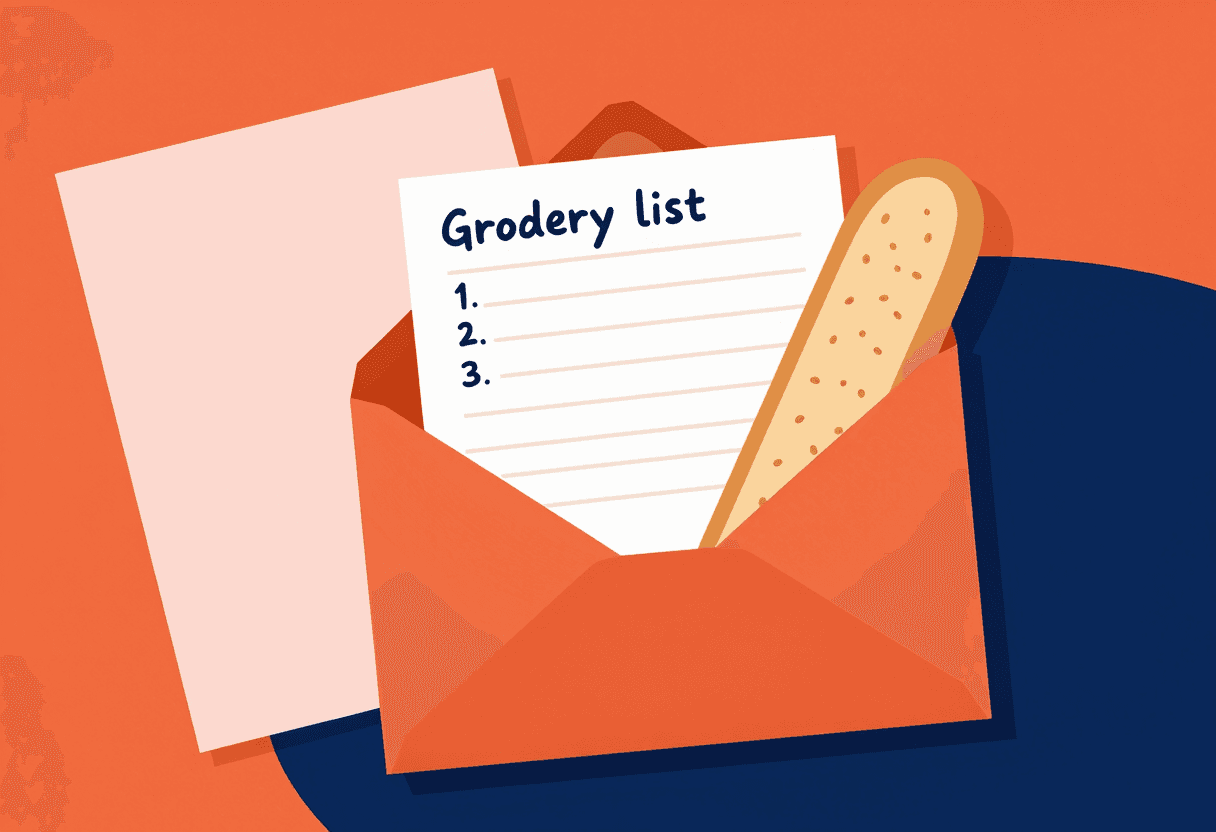
The Grocery List That Launched a Thousand Upvotes
Reddit user Due-Organization7321 spent three hours crafting the perfect cover letter for a Marketing Manager role. Thoughtful. Personalized. Referenced the company's mission statement. Hit send. Felt great.
Two minutes later, they checked their sent folder and discovered they'd attached their Notes app grocery list instead: "eggs x12, oat milk (not the cheap one), chicken thighs, resume paper??"
The question mark after "resume paper" is what gets me. Even the grocery list was having an existential crisis about the job search.
They sent a frantic follow-up with the actual cover letter. Apologized profusely. Explained they were juggling multiple applications. Then waited for the inevitable silence that follows most application mistakes.
The recruiter called the next morning. Opened with: "So… did you get the oat milk?"
They didn't get the job. But as the original poster noted: best interview of their life.
Why This Story Matters More Than You Think
This isn't just a funny Reddit story. It's a perfect case study in what actually makes candidates memorable in 2026, when most applications disappear into an algorithmic void.
Here's the thing about cover letters: only 35% of job seekers include one when it's optional, and just 38% submit one even when required. Meanwhile, one in three recruiters say cover letters are important when deciding who to interview.
The math is brutal. Most people skip the cover letter entirely. Those who write one often produce the same templated corporate speak that makes recruiters' eyes glaze over. Then someone accidentally sends their grocery list and gets a phone screen.
What changed? The candidate became a human being instead of a PDF.
I've reviewed thousands of cover letters. The ones that work aren't the ones that follow the formula perfectly. They're the ones where I can hear a real person's voice. Where someone takes a risk. Where I finish reading and think, "I want to talk to this person." Most candidates are so terrified of making mistakes on their resume that they sand off every rough edge until there's nothing left to grab onto.
What Actually Happens When You Send the Wrong Cover Letter
Let's be honest about what usually happens when you send the wrong cover letter. Not a grocery list—the more common version where you forget to change the company name, or you paste in a paragraph meant for a different role, or you reference skills that have nothing to do with the job you're applying for.
In my eight years recruiting, I saw this constantly. Someone would write a thoughtful cover letter for Company A, then copy-paste it for Company B and forget to update the specifics. The letter would talk about their passion for fintech when they were applying to a healthcare startup. Or they'd mention excitement about a product the company discontinued two years ago.
What happened to those applications? Honestly, it depended.
The Three Recruiter Responses to Cover Letter Mistakes
- Immediate rejection. If you're at a company that gets 500 applications per role, any excuse to thin the pile works. Wrong company name? Done. This is the risk, and it's real. Some recruiters see it as a sign you're not detail-oriented or genuinely interested.
- Ignore it entirely. Many recruiters barely read cover letters anyway. They skim for red flags, then move to the resume. If your resume is strong, the cover letter mistake might not even register. I've hired people who later admitted they sent the wrong version. I never noticed.
- Find it humanizing. This is rarer, but it happens. A small mistake that doesn't undermine your qualifications can actually make you more memorable. It signals you're a real person juggling a lot, not a bot generating perfect applications.
The grocery list story landed in category three because it was so absurd it became charming. A standard wrong-company-name mistake usually lands in category one or two, depending on how desperate the company is to fill the role.
The Real Lesson Isn't "Make More Mistakes"
Before everyone starts deliberately sending their grocery lists, let's be clear: you should still proofread your applications. You should still customize your materials. You should still check that you attached the right file before hitting send.
The lesson here isn't that mistakes help you. It's that humanity helps you.
The grocery list worked because it was unexpected and genuine. But you don't need to make a mistake to be unexpected and genuine. You just need to stop writing like a corporate press release and start writing like a person who wants this specific job for specific reasons.
The bar for standing out is on the floor. You just have to be accidentally human.
That Reddit user nailed it with that line. Most cover letters are so generic, so filled with buzzwords and empty enthusiasm, that anything remotely human stands out. You don't need to send your grocery list. You need to write like yourself.
What "Accidentally Human" Actually Looks Like
Here's what I mean by writing like a human instead of a cover letter template:
- Use contractions. "I'm excited" instead of "I am excited." "You're building" instead of "You are building." It's a small thing that makes a huge difference in how your writing sounds.
- Tell a micro-story. Instead of "I have extensive experience in project management," try "Last quarter, I inherited a project that was three weeks behind and $40K over budget. Here's what I did." Specifics beat generalities every time.
- Admit what you don't know. If you're changing careers or stretching for a role, acknowledge it directly. "I haven't managed a team of 15 before—my largest was 8. But here's why I'm confident I can scale" is more compelling than pretending you've done everything.
- Show you actually researched the company. Not "I admire your commitment to innovation" but "I saw your Q3 product launch got roasted on Twitter for the UI, then you shipped a complete redesign in six weeks. That's the kind of team I want to be on."
- End with something memorable. Not "I look forward to hearing from you" but something that gives them a reason to remember you. A specific question. A bold statement about what you'd do in the role. Something that makes them think, "Huh."
None of this requires making a mistake. It just requires caring enough to write something that sounds like you actually want this job, not just any job.
When Cover Letters Actually Matter (And When They Don't)
Let's address the elephant in the room: more than 8 out of 10 recruiters have rejected a candidate based on details in their cover letter. That's a terrifying statistic if you're spending hours on every application. But it's also misleading without context.
Here's when cover letters actually influence hiring decisions:
- When you're changing careers and your resume doesn't obviously connect to the role. The cover letter is where you make the case for why this pivot makes sense.
- When you're applying to smaller companies or startups where the hiring manager reads every application personally. They're looking for cultural fit and communication skills, both of which come through in writing.
- When there's something unusual in your background that needs explanation—a gap, a short tenure, a sideways move that looks random without context.
- When the job posting explicitly asks for one and gives you specific prompts to address. Ignoring this is like not preparing for common interview questions—it signals you don't follow instructions.
Here's when cover letters barely matter:
- When you're applying to massive companies that use ATS systems to filter hundreds of applications. Your resume keywords matter infinitely more than your cover letter prose.
- When you're applying through a recruiter or referral. The person vouching for you carries more weight than anything you write.
- When your resume is so obviously qualified for the role that the cover letter is just confirmation you can write a coherent paragraph.
- When you're in a technical field where your portfolio, GitHub, or work samples do the talking. Though even then, a short note about why you want this specific role can help.
How to Recover When You Actually Send the Wrong Thing
Okay, so you've sent the wrong cover letter. Not a grocery list—that's charming. You've sent a letter clearly meant for a different company. Or you attached last year's resume. Or you called the hiring manager by the wrong name. What now?
The Reddit user did exactly the right thing: acknowledged it immediately, apologized briefly, sent the correct version, and moved on. Here's the framework for damage control:
- Send a follow-up within an hour if possible. The faster you catch it, the more it looks like a simple mistake rather than carelessness. Subject line: "Corrected application materials for [Job Title]."
- Keep the apology short. One sentence maximum. "I apologize—I attached the wrong version of my cover letter." Don't grovel. Don't over-explain. Don't make it weird.
- Attach the correct version. Make it stupidly obvious which document is which. "Please find my correct cover letter and resume attached." Not "Please see attached" where they have to guess which PDF is the right one.
- Add one sentence of value. Since you're emailing them again anyway, include something that reinforces why you're a strong candidate. "I'm particularly excited about this role because [one specific thing about the company or position]." Give them a reason to remember you for something other than the mistake.
- Do not send a third email. You get one follow-up to fix it. After that, you're just highlighting the mistake further. Let it go.
Most importantly: don't let one mistake derail your entire job search momentum. I've seen candidates get so paralyzed by sending the wrong materials to one company that they stop applying anywhere for weeks. The best response to a mistake is to keep moving forward and apply to ten more places.
The Bigger Picture: Standing Out in 2026
This grocery list story went viral because it captures something everyone applying to jobs feels right now: the system is broken, the competition is brutal, and sometimes it feels like you need divine intervention or a cosmic joke just to get noticed.
The truth is less dramatic but more actionable. You don't need luck. You need to stop doing what everyone else is doing.
Everyone else is using the same resume templates. Copying the same cover letter frameworks. Writing the same LinkedIn headlines. Applying to 100 jobs with identical materials and wondering why nothing happens.
The candidates who break through are the ones who take the time to customize their applications in ways that show they actually care about this specific opportunity. They research the company beyond the About page. They find the hiring manager's name. They reference specific challenges the company is facing and explain how they'd address them.
They write cover letters that sound like a human being wrote them, not like ChatGPT on autopilot.
The grocery list worked because it was unexpected. But you can be unexpected without making a mistake. You can be memorable by being thoughtful, specific, and genuinely interested in the work.
The bar for standing out is on the floor. You just have to be accidentally human.
Or, you know, intentionally human. That works too.
Build a resume that stands out for the right reasons—try our free AI resume builder.
Learn moreFrequently asked questions
What should I do if I sent the wrong cover letter to an employer?+
Send a brief follow-up email within an hour if possible. Keep the apology to one sentence, attach the correct version with clear labeling, and add one sentence reinforcing why you're interested in the role. Don't send multiple follow-ups—one correction email is enough.
Will sending the wrong cover letter automatically disqualify me?+
Not always. It depends on the company, the recruiter, and how strong your resume is. Some recruiters will reject you immediately for lack of attention to detail. Others barely read cover letters and won't notice. A few might find a small mistake humanizing if your qualifications are solid.
Do recruiters actually read cover letters in 2026?+
It varies widely. One in three recruiters say cover letters are important when deciding who to interview. They matter most for career changers, smaller companies, and roles requiring strong writing skills. They matter least for technical roles with strong portfolios or applications to large companies using ATS systems.
How can I make my cover letter stand out without making a mistake?+
Write like a human, not a template. Use contractions, tell specific micro-stories instead of listing generic skills, show you actually researched the company, and end with something memorable. The goal is to sound like you genuinely want this job, not just any job.
Written by
Jordan MitchellRecruiting Insider
Former corporate recruiter. 10,000+ resumes screened, 3,000+ interviews conducted.